The short answer
Choose cast acrylic when the payload has to see out through the tube wall, the depth is well inside the rating for that diameter, the electronics make little heat and the housing is rarely opened. Choose anodised aluminium for anything deeper, hotter or serviced often: it holds a flat depth rating, typically 1,000 m, and conducts heat out of the housing.
- Acrylic's depth rating falls as the tube gets wider and longer; aluminium's typically does not at these depths.
- A Jetson, power converter or motor controller in an acrylic tube has nowhere to shed its heat.
- Acrylic scratches, crazes under some solvents and can crack if its end caps are tightened again and again.
Aluminium versus acrylic subsea enclosures
Aluminium and acrylic are the two usual materials for small underwater housings, and depth rating is only one of the ways they differ. Here they are side by side, with the cases where each is clearly the right choice.
Depth rating: not a like-for-like number
An anodised aluminium tube holds a flat depth rating — typically 1,000 m across the diameter range — because the wall is thick enough that diameter is not the limiting term for the depths these vehicles work at.
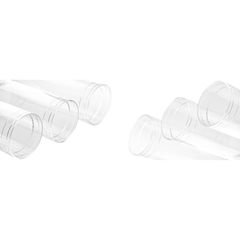
Cast acrylic does not behave that way. Its rating falls as diameter and length increase, roughly from 250 m at small diameters down toward 20 m for the largest, longest tubes. This catches people out when scaling a design: moving from a 4-inch to a 6-inch acrylic housing to fit a bigger payload can quietly halve the depth the vehicle is rated for.
The practical consequence is that acrylic is a shallow-water material that happens to be transparent, and aluminium is a general-purpose material that happens to be opaque. If the operating envelope is deeper than a couple of hundred metres, the comparison is over before it starts.
Optical access is the one thing acrylic does that aluminium cannot
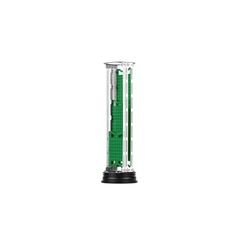
Full optical clarity through the tube wall is the entire case for acrylic, and where a payload needs it, nothing else will do. A camera that must see sideways through the housing, a light sensor, an optical communications head — these are acrylic applications.
But check whether the payload needs to see through the wall or only through the end. A forward-looking camera needs a window, not a transparent tube, and a window is available as an end cap on an otherwise aluminium housing: flat acrylic for shallow work, moulded polycarbonate dome for wide-angle and reduced drag, or a borosilicate glass flange cap where optical throughput and repeated servicing both matter.
The dome is worth understanding. A flat viewport refracts at the water-to-window interface, narrowing the effective field of view and introducing distortion at the edges; a dome port with the lens at its centre of curvature largely avoids both. For wide-angle inspection work that difference is significant.
Thermal behaviour matters more than teams expect
Aluminium conducts heat; acrylic effectively does not. On a housing containing a passive data logger this is irrelevant. On one containing a Jetson-class compute module, a power converter or a motor controller, it decides whether the electronics survive.
A sealed acrylic tube is a thermos. The heat has nowhere to go but into the trapped air, and the internal temperature climbs until the electronics throttle or fail. An aluminium tube couples that heat into effectively infinite cold water, and the usual design move — bonding the hot component to the tube wall with a thermal pad or a machined bracket — turns the whole housing into a heatsink.
If the payload dissipates more than a handful of watts continuously, that alone can decide the material.
Servicing, handling and the things that go wrong
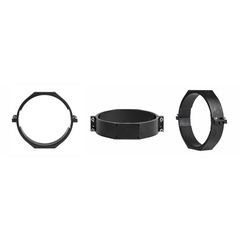
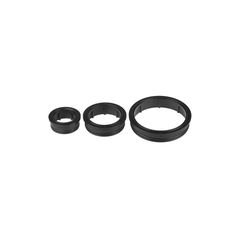
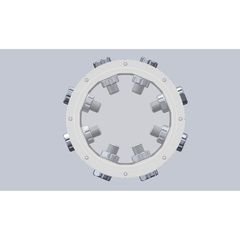
Acrylic is brittle and notch-sensitive. It crazes under solvent exposure — including some of the cleaners used to remove marine growth — and it scratches. Repeated tightening against an acrylic sealing face can indent or crack it, so acrylic end caps suit infrequent disassembly rather than a service-every-cruise workflow. Clamping an acrylic tube directly to a rigid rail concentrates stress on a thin wall; purpose-made clamp sets exist for exactly this reason.
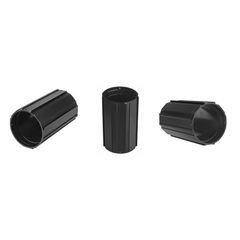
Aluminium tolerates handling, tolerates solvents, tolerates being clamped to a frame, and can be serviced repeatedly without the sealing faces degrading. Anodising protects it, but remember that aluminium in seawater in electrical contact with dissimilar metals will corrode galvanically — so fastener and fitting materials need thought that acrylic does not require.
One genuine advantage of acrylic beyond optics: you can see inside. Spotting condensation, a displaced connector or the first sign of ingress through the wall is a real diagnostic benefit on a test platform.
How to choose
Choose acrylic when the payload must see out through the tube wall, the depth is comfortably within the rating for that diameter, the internal heat load is small, and the housing will not be opened often.
Choose aluminium when depth exceeds a couple of hundred metres, when the payload dissipates real power, when the housing is opened every deployment, or when the vehicle takes knocks — which covers most working platforms.
A common and sensible outcome is both: an aluminium main housing for compute, power and heat, and a small acrylic or domed-cap housing for the optical payload. There is no rule that a vehicle has one housing material.
Sources.
- Depth ratings, materials, diameters and weights for Blu-Sub's acrylic and aluminium pressure vessel tubes, from the manufacturer's published specifications.
- The borosilicate glass flange end cap's light transmission of about 95%: Blu-Sub's published figure.
Published 16 August 2026. Last revised 25 September 2026. Corrections to sales@vebixautomation.com.
Specifying a housing?
Send the payload, the depth and the heat load, and we will confirm the material, diameter, end caps and seals to go with them. Ask for a quote.
More on underwater robotics
- Underwater and ROV thrusters in IndiaBlu-Sub and Blue Robotics underwater thrusters for ROVs, AUVs and USVs, with prices in rupees and delivery across India included.
- How to choose an underwater thruster for an ROVHow to choose an underwater thruster for an ROV by thrust, voltage, depth rating, ESC, rotation and mounting.
- How to size an underwater thruster for an ROVSize ROV thrusters from drag, target speed and vectoring angle. Worked method for thrust per unit, thruster count and the margin real vehicles need.
- Designing a 300-metre ROV propulsion systemPropulsion design for a 300-metre ROV: thruster count and layout, bus voltage, tether losses, sealing and the effect on buoyancy.
- Selecting a subsea enclosure for marine research payloadsHow to choose a subsea enclosure, end caps, seals and penetrators for research payloads, and how to test them before fieldwork.
- Subsea pressure and depth conversion guideConvert depth to pressure in bar, psi, MPa and atmospheres. Reference table, the formula behind it, and how depth ratings and test pressures relate.
/LR/thumb/Blu-Sub_EncIF_ShelfSupp_LR_01.jpg)