The short answer
Standard GPS is enough when a metre or two of position error is acceptable. Choose RTK when the vehicle must come back to the same coordinates to within centimetres, and plan the base station or correction service and its data link at the same time. Choose a dual-antenna receiver when you need a heading that doesn't depend on the compass.
- RTK is a system: a base, a rover and a link that carries the corrections.
- Dual-antenna heading and corrected position are different things. Holybro's UM982 gives heading without a base.
- Match the receiver's UART or DroneCAN interface to the controller port before you order.
Drone GPS, RTK and dual-antenna heading: which do you need?
Position and heading are two separate requirements. A receiver that improves where your drone thinks it is won't necessarily improve which way it thinks it is facing. Pick the GNSS setup for the measurement your mission needs.
Answer three questions before you choose a receiver
Position: how accurately must the vehicle know where it is? Repeatability: must it come back to the same coordinates on another day? Heading: must it know which way it faces near magnetic interference? Write a separate pass criterion for each, and say where the vehicle will operate.
A standard GNSS receiver is enough for a vehicle that doesn't need corrected positioning. An RTK rover can also use correction data. A dual-antenna system adds a heading worked out from the distance between its two antennas. These are three different capabilities, and "RTK" in a product name doesn't mean it has all three.
RTK needs a whole system around the rover
The PX4 RTK guide describes a ground base, a vehicle rover and a link carrying correction data. Some installations instead use a compatible correction service. Plan where the corrections come from and how they reach the drone at the same time as you choose the receiver, including what happens when that link drops.
For a local base, plan a fixed mounting spot with a clear view of the sky. A quick survey-in is different from fixing the base against a known survey point: an RTK fix on the receiver doesn't prove your whole project sits in the coordinate system you need.
A good brief might say: 'Repeated inspection at the same outdoor test site, with a local base and logged correction status.' That is far more useful than 'centimetre GPS'. Say whether you need navigation, survey results or both; survey work also involves the payload and how it measures.
Dual antennas address heading
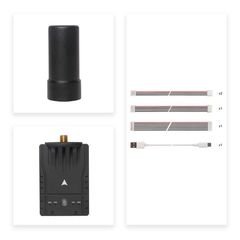
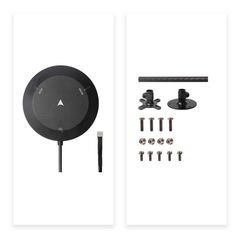
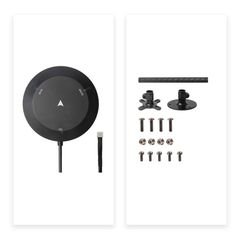
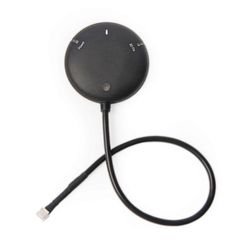
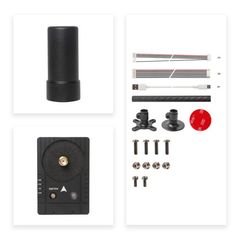
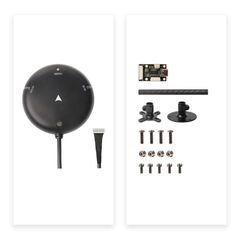
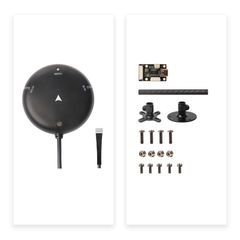
Holybro documents the dual-antenna H-RTK UM982 as a GNSS yaw source that can operate without corrections from a fixed base or NTRIP server. Heading from two antennas is a different thing from corrected absolute position. Holybro's single-antenna Ultralight version doesn't give you GPS heading at all.
Before choosing a heading receiver, sketch where both antennas will go and measure the space. Check the manufacturer's spacing, orientation and firmware requirements for that exact model. A second GPS port on the controller doesn't mean heading will work.
Confirm the interface and record the exact variant
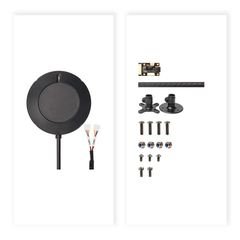
UART and DroneCAN are different connections. Match the receiver version to the controller port, the cable pinout and the firmware. Record the flight-controller model and baseboard, firmware version, antenna type, supplied cable length and whether the quotation includes a base receiver.
Shortlist from our Holybro GPS and RTK range, then check the whole system. Send the same interface details with your quote request, so we match a replacement by what it does and how it connects. Two modules can look alike and connect differently.
A practical acceptance record
Before flight, record receiver detection, fix state, correction status and reported heading with the vehicle stationary in its intended outdoor test environment. Then compare the reported heading with the known antenna orientation. Log the exact configuration alongside the results so a later firmware or cable change is traceable.
Include a controlled test of what happens when corrections are lost and come back. Agree the measurements before you order: we need a tolerance and a use case to recommend a receiver, and your team needs a repeatable way to check the installation meets them.
Sources.
- PX4: RTK GNSS system architecture and heading configuration. Follow documentation for the installed firmware release.
- Holybro: H-RTK UM982 overview and positioning/heading distinction.
Published 5 September 2026. Last revised 25 September 2026. Corrections to sales@vebixautomation.com.
Planning a UAV positioning system?
Send us your controller, firmware, position tolerance, heading requirement and where your corrections will come from. Ask for a quote and we will reply within one business day.
More on drones and autopilots
- Pixhawk 6C, 6C Mini, 6X or 6X Pro: which flight controller should you choose?Compare Holybro Pixhawk 6C, 6C Mini, 6X and 6X Pro: integrated versus separate baseboard, case and variant options, and an exact-SKU checklist to order from.
- Analog, digital or DroneCAN: choosing a Pixhawk power moduleMatch a Pixhawk power module to its controller: analog sensing, I2C digital sensing and DroneCAN, plus voltage, current and wiring checks before ordering.
- Building an AI research drone: integrating a companion computer with PixhawkFit a companion computer to a Pixhawk: who does what, serial and Ethernet links, separate power, cooling and a bench-test checklist.
- How to choose a UAV telemetry radio: data rate, range and ground-station compatibilityChoose a UAV telemetry radio: data rate against range, a worked 915 MHz link budget, antennas and ground-station fit.
- Choosing a drone ESC: PWM, DShot, telemetry and programming compatibilityChoose a drone ESC by control protocol, telemetry path and firmware family: PWM versus DShot, BLHeli-32 versus AM32, configuration tools and troubleshooting.
- Holybro S500, X500 V2 or X650: choosing a drone development kit for researchCompare Holybro S500 V2, X500 V2 and X650 drone kits: wheelbase, included propulsion and avionics, frame versus ARF versus development format.